Sunday, December 7, 2014

Saturday, November 29, 2014
C4T #4 Summary
C4T#4 Post#1  I chose Mr. Fix's Blog for my C4T#4 Post #1. He shared a video on how to introduce your students to heat energy. He had two different blocks made out of different things and seen which block melted an ice cube faster. One block allowed the heat to come through enough to rapidly melt the ice, and the other block kept it from melting. Here is my comment:HI,My name is Felicia Grantham. I am a student at the University of South Alabama studying Elementary Education. I really liked your video/blog post about heat energy. I enjoy science and hope to be a really fun, interactive teacher in that subject. If I ever have to teach about heat energy, I will try your method to introduce it to my students. Thanks for the information.
C4T#4 Post#2 I chose Ms. Sandi's Blog, Rubber Boots and Elf shoes. In her blog post, Ms. Sandi showed a picture of a sensory tray decorated like Van Gogh's Starry Night. It is a very beautiful, simple project for a class to participate in while studying Van Gogh, or just studying art. Here is my comment:Hi, My name is Felicia. I am a student at The University of South Alabama studying to be an elementary education teacher. The Starry Night sensory tray is beautiful. I enjoyed learning about Van Gogh in my art classes and this is something I will definitely try out in my future classroom. Thanks! I really like a lot of your creative ideas.

C4T#4 Post#2

Blog Post #5 Part 2

Sunday, November 23, 2014
C4K Summary for November

C4K#9-Cameron..... Cameron’s blog post was about product design. He talked about designing a pair of glasses with changeable lenses. Grey lenses for day-time when it is bright, and red or orange for night-time when it is dark. Here is my comment:Hey Cameron, My name is Felicia Grantham. I live in Mobile, Alabama and I am a college student at the University of South Alabama. I am studying to be an Elementary School Teacher. I love your creativity and I love the product that you designed. I have to wear glasses every day, so I would enjoy a pair of these. It would be neat if you could make some different colored prescription lenses as well. Keep up the good work!
C4K#11-Connor..... Connor wrote about his progress in the first quarter of school. He learned new things in social studies like our Constitution and The Bill of Rights. He also had a good use of vocabulary in his post. Here is my comment:Hey Connor, My name is Felicia Grantham. I am a student at The University of Alabama studying to be a teacher. I love your use of vocabulary, it is always superb to use better words when you are writing. I am very happy to see that you are learning about new things in school. Keep up the good work!
Blog Post 14


Sunday, November 16, 2014
Blog Post 13
Instructions for Blog Post #13
 This week, write a blog post about the pros and cons of technology in the classroom. Explain your thoughts on both sides of the argument. Here are some resources to get you started! Feel free to add your own research.
Edudemic.com
Concordia Online Education
Pros and Cons of Technology In The Classroom I have come to realize that there are many arguments about technology in the classroom. I believe that technology does help children advance further in their education, but I also think that it could be bad for some as well. Technology helps children with research, collaboration, and other skills they need to succeed in life. Technology has changed the way that teachers teach and also the way that students learn. It helps teachers engage their students more, and makes the students more interested because they are "playing with technology". There are so many different devices that are good to use in school like ipads, tablets, Macbooks, and even smart phones. There are also millions of different apps and websites that students can use to help them with anything they need help with, the opportunities that technology gives to students are endless. Blogging has become a big part of the elementary education world. Students of all ages are writing blogs about stories they have read, projects they create, and personal stories they may want to share. People from all over the world comment on these blogs that students create. It is exciting for a student to see someone from another school, another state, or even another country leave comments about their work. Blogging motivates students because they know they are no longer just writing for their teacher or for a grade, they're writing for people all over the world; and that can be very inspiring to students and teachers as well.
However, after studying and being in the elementary education field, I have heard a lot of teachers' opinions on technology being used in the classroom. Although, the teachers I have talked to that have a different opinion on technology are those that teach grades K-2. I observed a 1st grade class recently, and after looking around for a while I realized that the only technology in any of the classrooms in that school was a smartboard, and one laptop computer (no Apple products). So I asked her how often she used technology while teaching and what she had to say after that was very interesting and made me think of things I had not thought of before. She believes that the instant response that students receive when using their technological devices are not teaching them how to be patient. This makes the students expect everything to come to them in an instant, and when something does not work out that way outside of technology, they are not very happy campers. It is important that you not only teach children the curriculum, but also teach them real-life skills that they will need to succeed in life. Also, students this young (1st grade) have a hard time sharing or waiting their turn when having to do something with a group of children, so with that, only brings more complications and wasted time for the teachers.
Personally, I see both sides of the argument having valid points. I can see how technology helps children tremendously with their education and real life skills. Also, I can see how it could be more of a distraction than a better way to learn when it comes to younger grades like K-2.

Edudemic.com
Concordia Online Education
Pros and Cons of Technology In The Classroom I have come to realize that there are many arguments about technology in the classroom. I believe that technology does help children advance further in their education, but I also think that it could be bad for some as well. Technology helps children with research, collaboration, and other skills they need to succeed in life. Technology has changed the way that teachers teach and also the way that students learn. It helps teachers engage their students more, and makes the students more interested because they are "playing with technology". There are so many different devices that are good to use in school like ipads, tablets, Macbooks, and even smart phones. There are also millions of different apps and websites that students can use to help them with anything they need help with, the opportunities that technology gives to students are endless.

However, after studying and being in the elementary education field, I have heard a lot of teachers' opinions on technology being used in the classroom. Although, the teachers I have talked to that have a different opinion on technology are those that teach grades K-2. I observed a 1st grade class recently, and after looking around for a while I realized that the only technology in any of the classrooms in that school was a smartboard, and one laptop computer (no Apple products). So I asked her how often she used technology while teaching and what she had to say after that was very interesting and made me think of things I had not thought of before.

Personally, I see both sides of the argument having valid points. I can see how technology helps children tremendously with their education and real life skills. Also, I can see how it could be more of a distraction than a better way to learn when it comes to younger grades like K-2.
Tuesday, November 11, 2014
Sunday, November 9, 2014
C4T #3 Summary
C4T#3 Post#1
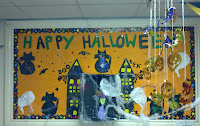 I was assigned Ms. Vierstra's blog for C4T#3 Post #1. Her blog post was about different educational activities to do during Halloween. I enjoyed all of her suggestions. One of the suggestions were to compare and contrast different versions of the same Halloween story. This activity helps with reading and writing skills. Ms. Vierstra explained how she had her students make costumes based off of characters out of a book they were reading. One of her quiet students excelled at this activity because she wants to design clothes one day. All of the students enjoyed her presentation.
Here is my comment: Hey Ms. Vierstra, My name is Felicia Grantham. I'm a student at the University of South Alabama studying to be an elementary school teacher. I really enjoyed reading your post. Halloween is my favorite holiday. I'm very into decorating and doing crafts with children, so I can't wait to have a class to teach during Halloween. Thank you for all of the different sources you mentioned in your post. Those will be very handy to me in college, as well as after I graduate. I'm looking forward to reading more posts.
I was assigned Ms. Vierstra's blog for C4T#3 Post #1. Her blog post was about different educational activities to do during Halloween. I enjoyed all of her suggestions. One of the suggestions were to compare and contrast different versions of the same Halloween story. This activity helps with reading and writing skills. Ms. Vierstra explained how she had her students make costumes based off of characters out of a book they were reading. One of her quiet students excelled at this activity because she wants to design clothes one day. All of the students enjoyed her presentation.
Here is my comment: Hey Ms. Vierstra, My name is Felicia Grantham. I'm a student at the University of South Alabama studying to be an elementary school teacher. I really enjoyed reading your post. Halloween is my favorite holiday. I'm very into decorating and doing crafts with children, so I can't wait to have a class to teach during Halloween. Thank you for all of the different sources you mentioned in your post. Those will be very handy to me in college, as well as after I graduate. I'm looking forward to reading more posts.
C4T#3 Comment#2
 I was assigned Ms. Wessling's blog for C4T#3 Post#2. Ms. Wessling wrote about "Skinnying" the standards. She sorted out lots of common core standards into six buckets that she keeps in her classroom, each bucket has a different category. The students in her class really seem to enjoy this technique she has, and a few of them even said that they did believe it helps them. She includes a very inspiring video in her blog post that explains it all. Here is my comment: Ms. Wessling, Hey! My name is Felicia. I'm a student at The University of South Alabama studying Elementary Education. I really enjoyed your blog post and video. I am very inspired by your idea. I love how you took control of these common core standards to better your students' education. Teachers like you are who inspires me to be the best teacher I can be. Thank you so much for sharing.

C4T#3 Comment#2

Thursday, November 6, 2014
Saturday, November 1, 2014
Blog Post 11
What can we learn about teaching and learning from these teachers?
 In Brian Crosby's, Back to the Future, he showed us a few different ways he has used Project Based Learning in his classroom. He has great ways of making his students passionate about what they're learning. Students having passion and interests in what they're learning, goes a long way with how they will retain the information. Mr. Crosby had lots of different fun ideas for the students in his class. I really liked how different students from all over the world was wanting to do the fun projects in their classrooms that he done with his students. Mr. Crosby even Skyped with another teacher from New Zealand to show her how to do one of the projects. My favorite part of the video was when he showed how he incorporated Celeste into his class. Celeste is a little girl that has cancer and a weak immune system, so she can't physically go to class. Mr. Crosby Skypes her into the class so that she can participate with him and her classmates; the classmates are very accepting of Celeste, which shows how well of a job Mr. Crosby is doing with his students.
 Mr. Paul Andersen came up with a great way to help his students learn. He explained his process in a video called The Blended Learning Cycle. He took two learning techniques (Blended Learning and The Learning Cycle) and blended them together to become the Blended Learning Cycle. He uses the word "quivers" to define the six steps he uses. Question...Investigation...Video...Elaboration...Review...Summary Quiz. He says in his video that he teaches his students how to go through a text book to find what they're looking for and actually know what they're reading. I think having this skill will be very helpful to students when they reach college age. I took too much time in my first couple of semesters trying to learn how to find information I was looking for and trying to learn how to use a textbook. That even goes hand in hand with finding things on the internet. They're both great resources for finding information and I think it is critical for students to learn how to do this at an early age.
Making Thinking Visible is a book written by Mark Church. In the Ad, it shows how he asks his students a driving question before getting deep into the lesson. After a couple of weeks, he asked the same question to see if any of their views have changed. He is making them aware of how they are learning, and ultimately making thinking visible to his students.
Here are a few more videos that do a very good job demonstrating how Projects Based Learning works.
Building Comics
Project Based Learning
Roosevelt Elementary's PBL Program
Project Based Learning allows children to explore more into what they are being taught. This ususally makes students more interested, which triggers better understanding about what they are learning. With Project Based Learning you can have a whole community come together to help students learn. Project Based Learning gives students real world problem solving skills to be able to think for themselves as they enter their adult life.


Making Thinking Visible is a book written by Mark Church. In the Ad, it shows how he asks his students a driving question before getting deep into the lesson. After a couple of weeks, he asked the same question to see if any of their views have changed. He is making them aware of how they are learning, and ultimately making thinking visible to his students.
Here are a few more videos that do a very good job demonstrating how Projects Based Learning works.
Building Comics
Project Based Learning
Roosevelt Elementary's PBL Program
Project Based Learning allows children to explore more into what they are being taught. This ususally makes students more interested, which triggers better understanding about what they are learning. With Project Based Learning you can have a whole community come together to help students learn. Project Based Learning gives students real world problem solving skills to be able to think for themselves as they enter their adult life.
Thursday, October 30, 2014
Project #14 Project Based Learning Plan #2

Lesson Plan
Calendar
Individual Project Rubric
Teachers Rubric
Sunday, October 26, 2014
Blog Post 10
What can we learn from Ms. Cassidy?
 After watching the interviews with Ms. Cassidy and this video of her class, I was very impressed with how she jumped straight into using technology and learned about it along with her class. There were five computers for her class and she wanted to take advantage of having such items to work with. Ms. Cassidy is aware of how the world is changing and that we need to prepare our future leaders for the lives that are ahead of them. I really liked how she said there is a shift happening when it comes to the way we should react to our kids looking at other peoples' work. As teachers, we should motivate our students to help one another and teach them how to be collaborative with all of their work. We should discourage them to think it is "cheating" and teach them that helping one another is a better way for anyone to learn. If students are taught at a young age to be able to collaborate and work with groups, and teachers not drill it in their head that if they're looking at someones paper it is wrong and they will get in trouble; Then maybe students would never try to "cheat" to begin with. Right?
I would definitely use blogs for my classroom. I would have each student have one individually, and have one for our entire class as well. Students get more excited to write to an audience than they would just writing to their teacher. People from all over the world can see their blog, read it, comment on it, and parents can keep up with what their child is doing too.

I would definitely use blogs for my classroom. I would have each student have one individually, and have one for our entire class as well. Students get more excited to write to an audience than they would just writing to their teacher. People from all over the world can see their blog, read it, comment on it, and parents can keep up with what their child is doing too.
Thursday, October 23, 2014
C4K Summary for October

C4K #5 Tommy R. Tommy's post asked the question "Should kids lose recess for bad behavior?". He said no, that it is very important for kids to get plenty of exercise. Also, if kids get exercise outside, they would not be a "bad actor" in class. Here is my comment: Hey Tommy, My name is Felicia. I live in Mobile, Alabama and I am a college student at The University of South Alabama. I love the topic you have written about on your blog post. I agree with you. I think it is very important that every child have daily exercise. When I was your age, we played outside quite often and I do not think recess was ever taken away as a punishment, nor should it be. Keep up the good work! I am looking forward to seeing your future posts.
C4K #6 Olivia Olivia had a very impressive blog post about how to be safe on the internet. I was happy to see a child at her age know so much about how to keep her information safe. Here is my comment: Hey Olivia! My name is Felicia Grantham. I live in Mobile, Alabama and I am a college student at The University of South Alabama. I really like your blog post about how to be safe on the internet. It can be very dangerous to put your information out there, so I am thrilled that you know how to be safe at such a young age. Hopefully, you can teach other children how to be safe on the internet as well.I look forward to reading more posts. Keep up the good work!
C4K #7 Aaron Aaron's blog post was a presentation about how to read maps. He made a map with a key, and also showed some questions he had to answer about his map. His presentation was very neat and easy to understand. Here is my comment: Hey Aaron, My name is Felicia Grantham. I live in Mobile, Alabama in The United States of America. I am a college student studying to be a school teacher. I really loved your presentation and blog post. It was very neat and easy to understand. I liked your map key as well. Keep up the good work! I look forward to reading more of your posts.
Sunday, October 19, 2014
Blog Post 9
What Can Teachers And Students Teach Us About Project Based Learning?
By now I am realizing that children do not learn the same way I learned when I was young. It was very different for me growing up. I think that Project Based Learning is a way that is necessary for children to learn more effectively. I knew I always wanted to be more interactive than some of the teachers I had in elementary school, and now teaching in the 21st century gives me that opportunity. I love to see how much children are engaged when involved in Project Based Learning.
 For this post, I learned about Seven Essentials for Project Based Learning. The First one was -A need to know. When designing a project for your students you should always introduce it to them in a fun and exciting way. You could create a video, go on a field trip, have a guest speaker, or even have a fun scavenger hunt for clues to what the project is. By doing this, you make the students more interested and give them curiosity, or "need to know" about the topic. The second thing on the list was -A driving question. This captures the heart of the project and sense of purpose to what they are learning about. Third was -Voice and Choice. It is important to give the children freedom to what they want to do in their project. Having it their way makes it more fun and holds their attention longer. You also have to be careful about giving too many choices, by doing so they might become overwhelmed by choices. Fourth on the list was -21st Century Skills. Collaboration, Communication, Critical thinking and problem solving are all very important skills for children to learn to be able to deal with everyday problems that they will face. The fifth thing on the list was -Inquiry and Innovation. When the students come up with a driving question for their project they end up generating more questions and problems, this creates a train-like learning effect for them to follow. Sixth was -Feedback and Revision. This step is very important when children are creating a project. It allows them to critique each others' work. As the teacher, it also helps you see where your students are in the process of their project. Seventh, and Last on the list was -Presented Project. It is better to have your students present their final projects to an audience. When they know it is going to be shown to people, they care about the quality of the project and the information is more meaningful when it is not just for the teacher or for tests.
 I had fun searching for more information on Project Based Learning. I found a couple of sources that were very interesting. One was a Project Based Learning lesson plan for a first grade class on ocean animals. I read through a lot of it and thought it was very neat and educational. It met many of their state standards, and the lesson plan was very detailed and thoroughly thought out. Plus, I love the ocean and what is inside of it, so I searched for PBL with oceans and came across a lot of fun ideas that I cannot wait to use. First Grade Lesson Plan
 I also found a video that was very cute! It was about five and six year old students utilizing project based learning in their classroom. They were doing so many different activities and projects like flying a pretend plane to Brazil, (A country the students were learning about.) Or sailing a cardboard ship to Africa. Everything the teachers were doing for these students turned into an educational lesson. The students were participating in lessons on the Smart Board, practicing their reading and writing skills, and playing out real-life situations by using PBL. One of the students (about 5-6 years old) was asked what he thought about using the Smart Board and the internet, and his response was "you can just learn" in a really excited voice. He is right, you CAN just learn! Five-Year-Olds Pilot Their Own Project Based Learning
I think that Project Based Learning is not only for students, but for teachers, parents, and the community as well. We all have the ability to help teach one another with PBL. I am learning that the opportunities are endless when it comes to using Project Based Learning in the classroom. Almost any situation you are faced with as a teacher can be turned into a valuable lesson for your students.
By now I am realizing that children do not learn the same way I learned when I was young. It was very different for me growing up. I think that Project Based Learning is a way that is necessary for children to learn more effectively. I knew I always wanted to be more interactive than some of the teachers I had in elementary school, and now teaching in the 21st century gives me that opportunity. I love to see how much children are engaged when involved in Project Based Learning.


I think that Project Based Learning is not only for students, but for teachers, parents, and the community as well. We all have the ability to help teach one another with PBL. I am learning that the opportunities are endless when it comes to using Project Based Learning in the classroom. Almost any situation you are faced with as a teacher can be turned into a valuable lesson for your students.
Sunday, October 12, 2014
Implications And Teaching Opportunities For Camera Use In Teaching and Learning.
Part A
 Dr. Strange posted some interesting facts about Millennials (People ages 18-24) and smart phones, on our EDM 310 class blog. (The information came from Zogby Analytics.) 87% of people in this group say that their smartphone never leaves their side. That is a very high percentage. Of course there are problems when it comes to dealing with smartphones in the classroom. Many students abuse the privilege of having one. But with such high percentages of how many people depend on their smartphones, can we really expect anything different? I have heard a lot of teachers complain about students using their phone during a lesson, and I can see why that would be frustrating. As a teacher, you put a lot of your heart and energy into lesson planning for the students to learn. They should at least pay attention and not have their phones out during this time.
However, I do believe there are many ways to implement the use of smart phones in the classrooms to cut down on the not so appropriate times they are being used. Maybe have set times during the day where students can use their phones in groups while collaborating. Or even giving small prizes at the end of the week to the people that follow the "smart phone rules" that you have set in your class. There are many educational apps that students can download to their smart phone that they can use to help them learn. It may take some time to get students to follow and respect your rules about smart phones, but I think that having the right attitude and approach would come with great compromising from your students.
Part B
 There are so many different things I could think of to make good use of smart phones and tablets that have cameras. Assuming that I am a third grade teacher, and all of my students have either a tablet or smart phone with a camera, I could do a little project on the first day of school that will help the students learn each others' names. I would have the students make a picture slide show using the camera and other tools on their devices. The slide show would consist of everyone's picture and name. The students would learn names by putting the project together as well as watching it back after it is completed. This is also a good way for parents to know all of the students in the class. Another great idea is to have an outside day where students can take pictures of different flowers and trees for a science lesson. This is similar to the lesson plan found on the ALEX website. I can't wait! I am so excited to get started with all of these creative projects that help students learn. I believe I will be a very lenient teacher when it comes to all technology in my classroom, thanks to EDM310.

However, I do believe there are many ways to implement the use of smart phones in the classrooms to cut down on the not so appropriate times they are being used. Maybe have set times during the day where students can use their phones in groups while collaborating. Or even giving small prizes at the end of the week to the people that follow the "smart phone rules" that you have set in your class. There are many educational apps that students can download to their smart phone that they can use to help them learn. It may take some time to get students to follow and respect your rules about smart phones, but I think that having the right attitude and approach would come with great compromising from your students.
Part B

Friday, October 10, 2014
Blog Post 8
What can we learn about teaching and learning from Randy Pausch? Randy Pausch's Last lecture was motivational and inspirational. It was a little long compared to other videos we have had to watch, but my eyes were on the screen the entire time. He has a great way of keeping his lecture interesting. I am an overly emotional person, so of course, this video made tear up a bit (just like almost anything else I watch). I love how passionate he is about enabling other people's dreams. I learned several things while watching this lecture. I have always heard, and sometimes used the term "I've hit a brick wall", but I have never heard the term explained the way it was explained in the video. Mr. Pausch said "Brick walls are there for a reason: they let us prove how badly we want things." He also explains how the brick walls are there to stop "the other people" , meaning the people that don't push hard enough to achieve something they're going after. Brick walls allow us to show our dedication to something that we are working on. I know I've hit a few while working on my degree, but hearing his words has taught me to push through it no matter what.
Mr. Pausch had a lot of powerful words that taught me a couple of ways to help enable my future students. He says "Wait long enough and people will surprise and impress you." This lets me know that I need to always make sure I never rush my students' work. Of course, children always need a friendly boost, but they also need time to be creative and have their own thoughts on things. Something else that was very helpful that Mr. Pausch talked about was how you should answer someone's question if you don't have the information they're seeking. Instead of saying "I don't know", you should say something like "I don't have very much information on that, but let's see what we can find out".(I've heard Dr. Strange say something similar as well). That was a very good piece of advice for us as future educators. We should never tell our students we don't know, and leave it at that. Instead, we should help them find a way to help themselves. By doing so only helps the students in the long run because it will make them think more critically and dig deeper for what they're searching for. That is something you can give your students that they can keep with them for life. Also, we should never set bars for our students. Setting bars could, in a way, hurt their creative and critical thinking abilities because you are cutting off what they could possibly do. Let your students go beyond what you expect from them.
Every week that goes by in this class, I learn more and more. I believe that this has been my favorite lesson so far. I gained so much from watching Mr. Pausch's lecture and I am looking forward to putting some of his advice to work!
Here are a couple of quotes stated by Randy Pausch that I really enjoyed.
"Experience is what you get when you didn't get what you wanted"
"The best gift an educator can give is to get someone to become self reflective"

Mr. Pausch had a lot of powerful words that taught me a couple of ways to help enable my future students. He says "Wait long enough and people will surprise and impress you." This lets me know that I need to always make sure I never rush my students' work. Of course, children always need a friendly boost, but they also need time to be creative and have their own thoughts on things. Something else that was very helpful that Mr. Pausch talked about was how you should answer someone's question if you don't have the information they're seeking. Instead of saying "I don't know", you should say something like "I don't have very much information on that, but let's see what we can find out".(I've heard Dr. Strange say something similar as well). That was a very good piece of advice for us as future educators. We should never tell our students we don't know, and leave it at that. Instead, we should help them find a way to help themselves. By doing so only helps the students in the long run because it will make them think more critically and dig deeper for what they're searching for. That is something you can give your students that they can keep with them for life. Also, we should never set bars for our students. Setting bars could, in a way, hurt their creative and critical thinking abilities because you are cutting off what they could possibly do. Let your students go beyond what you expect from them.
Every week that goes by in this class, I learn more and more. I believe that this has been my favorite lesson so far. I gained so much from watching Mr. Pausch's lecture and I am looking forward to putting some of his advice to work!
Here are a couple of quotes stated by Randy Pausch that I really enjoyed.
"Experience is what you get when you didn't get what you wanted"
"The best gift an educator can give is to get someone to become self reflective"
C4T # 2 Summary

I was assigned Ms. Jennifer Brokofsky for my C4T#2. Ms. Brokofsky wrote about her excitement to get back into blogging after changing her job position to vice principal. She also talks about things she has learned through her years of teaching. It really inspired me to know that I am not the only one that struggles with some of these things. Here is my comment: Hey Ms. Brokofsky, My name is Felicia Grantham. I am a student (junior) at The University of South Alabama. After reading this post, I am so glad to know that I am not the only one struggling with the idea of not knowing everything. I am a person that has to know everything about what I am doing, and will not be satisfied otherwise. It really is a relief to see you as a VP, not just teacher, say it is alright to not know how to deal with every question and problem that comes to you. Recently, I have been learning a lot about time management and the importance of it. You (others also) said it takes time to find out that everything will not happen the way you plan it, and you must be flexible to adjust to these changes. I am very happy to have read that you have found your way again. This was a very inspirational read for me. Thank You for your wonderful words!
C4T#2 Post#2

Sunday, October 5, 2014
Subscribe to:
Posts (Atom)